Threads That Hum: The Artists Weaving Sound Directly Into Fabric
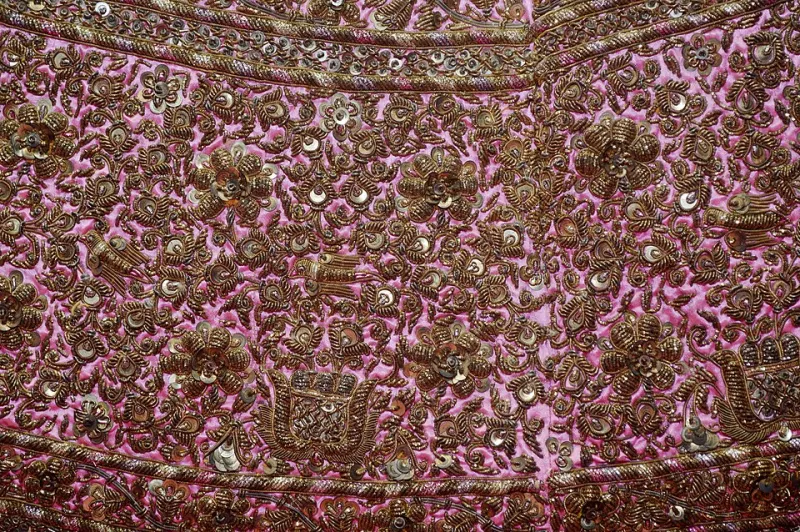
Photo: Yann (talk), CC BY-SA 4.0, via Wikimedia Commons
There's a jacket hanging in a Brooklyn loft right now that plays music. Not through a speaker tucked into a pocket, not via a Bluetooth chip sewn into the lining — but through a hand-embroidered patch that functions as a literal record of sound, translated stitch by stitch from a waveform into thread. You run a small stylus across it, and something close to a drone melody comes out the other end. It shouldn't work. And yet.
Welcome to the weirdest, most quietly compelling corner of contemporary art you probably haven't heard of yet: sonic textiles. It's a scene that lives at the crossroads of experimental music and fiber craft, and it's been building momentum in underground galleries, Etsy alternative shops, and niche Discord servers for the better part of three years. The practitioners are a mix of sound artists who picked up knitting needles, embroiderers who got obsessed with modular synthesis, and a whole lot of people who just couldn't pick one lane.
What Even Is a Sonic Textile?
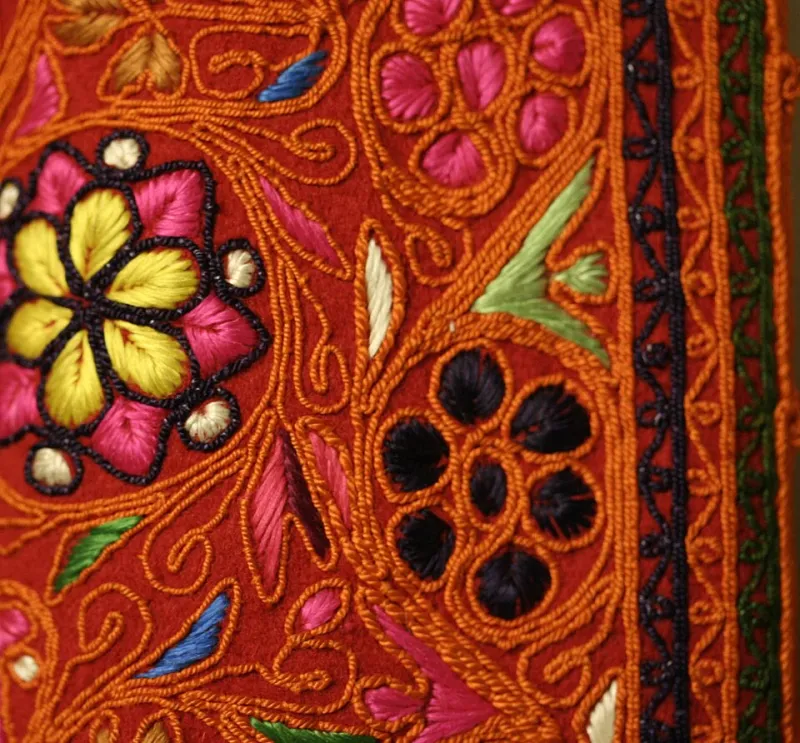
The term is loose enough to cover a genuinely wild range of work. On one end, you've got artists using conductive thread and microcontrollers to build pieces that respond to touch — press a stitched motif and a sample fires, drag your finger across a woven panel and a chord shifts. On the other end, there are makers working with purely analog methods: translating audio waveforms into physical stitch patterns that can be "read" by a needle or stylus, essentially handcrafting a playable groove the way a vinyl record stores sound in its spiral.
Then there's everything in between — knitted scarves whose color patterns encode MIDI sequences, quilts that map the frequency spectrum of a specific field recording, wearable vests that function as full-on lo-fi synthesizers when you know where to press.
The connective tissue (pun very much intended) is a rejection of the idea that art has to pick a sense. "I got so tired of people treating sound art and textile art like they lived in completely different universes," says Mara Osei, a Chicago-based artist who's been making conductive embroidery pieces for about four years. "They're both about pattern, repetition, texture, time. The overlap was always there. I just started taking it literally."
The Underground Gallery Circuit Is Paying Attention
Sonic textile work has been showing up with increasing regularity in the kinds of spaces that don't have a Yelp page — basement galleries in Philadelphia, converted warehouse pop-ups in Oakland, art-adjacent music venues in Austin that let visual artists take over the back room on off nights. The installations tend to be immersive by necessity: you can't really appreciate a piece that plays differently depending on how you touch it from across a room.
Last spring, a collective called Static Loom staged a three-night installation in a DIY space in Detroit where every piece in the show was both wearable and playable. Visitors could try things on, touch them, run provided tools across embroidered surfaces, and listen through small earbuds tethered to each garment. The line to get in stretched around the block on night two.
"People kept saying they didn't know how to experience it," says Jonah Ferris, one of Static Loom's founding members. "Like, do I look at it? Touch it? Listen? And that confusion — that's actually the whole point. We want you to not know the rules. Because there aren't any."
The Online Drop Economy Is a Perfect Fit
If the gallery circuit is where sonic textiles get their credibility, the internet is where they're building a real audience. Limited-edition drops of wearable pieces — patches, scarves, small framed embroideries with accompanying QR codes linking to audio documentation — have become a reliable way for artists in this space to fund their practice and connect with buyers who genuinely get what they're making.
The QR code element is interesting: many artists release a physical piece alongside a digital audio file that either explains how the piece works, contains the source sound that was translated into the textile, or functions as a companion track meant to be played while you hold the object. It's a hybrid release model that borrows from both the music industry and the art print market, and it's working.
Osei's last drop — twelve embroidered panels based on field recordings she made in a Chicago train yard — sold out in under two hours. She'd posted a video of herself running a stylus across one of the panels, the scratchy analog sound filling the frame, and it quietly went semi-viral in textile and experimental music communities simultaneously. "I got DMs from people who'd never touched embroidery in their lives and people who'd never listened to anything weirder than Radiohead," she says. "Both groups were equally confused and equally into it. That felt like a win."
The Tools Are Getting More Accessible
One reason this scene is expanding is that the barrier to entry has dropped significantly. Conductive thread is cheap and widely available. Microcontrollers like the Arduino and the Raspberry Pi Pico have massive hobbyist communities that have already done a lot of the technical groundwork. And the fiber arts revival of the past decade means there's a huge population of skilled embroiderers, weavers, and knitters who are already experimenting with their medium and looking for new directions.
YouTube and TikTok tutorials have helped too. Creators like Portland-based Devi Nakashima, who goes by @threadfrequency online, have built followings by documenting their process in real time — showing exactly how you translate a waveform image into a stitch pattern, or how to wire a simple touch-sensitive panel into a garment. "I wanted to demystify it," Nakashima says. "The sound art world can feel really gatekept. The craft world has its own gatekeeping. I wanted to show that you could just... start. With stuff you probably already own."
Where It's Headed
The honest answer is nobody knows, which is part of what makes it exciting. Some practitioners are pushing toward gallery legitimacy, applying for residencies and submitting to textile art institutions that are slowly warming to the idea that a piece can be both craft and sound installation. Others are leaning harder into the wearable and commercial side, exploring what it might look like to bring sonic textile work into fashion contexts — imagine a runway piece that literally plays a score as it moves.
What's clear is that the people doing this work aren't interested in being categorized. They're not sound artists who do crafts on the side. They're not textile makers who dabble in tech. They're something new, working in a space that didn't have a name three years ago and still doesn't have a fully settled one now.
Maybe that's exactly where the most interesting stuff always comes from — the gap between two worlds that haven't figured out they were always the same world.