Deliberately Imperfect: The Hand-Drawn Animation Collectives Fighting Back Against the Algorithm
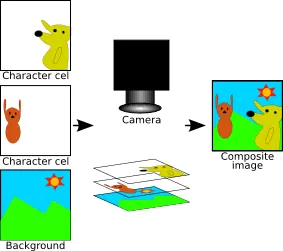
Photo: Garrett Albright at en.wikipedia, CC BY-SA 3.0, via Wikimedia Commons
There's a particular kind of magic in a line that shakes a little. Not because the animator's hand slipped, but because it breathes — because somewhere behind it, there's a person who made a decision about how that line should move, and then moved it that way, frame by painstaking frame. That magic is exactly what a growing cohort of indie animation studios across the US is betting their entire creative identity on.
In 2025, AI-generated animation is no longer a novelty. It's infrastructure. Content farms are churning out explainer videos, social ads, and even short films at a pace no human team could match. The tools are cheaper, faster, and getting scarily competent. So why are so many small studios — some operating out of living rooms in Portland, Brooklyn, and Austin — deliberately choosing to work slower, weirder, and by hand?
The short answer: because slow and weird is starting to sell.
The Texture Problem
When everything looks the same, difference becomes desirable. That's the quiet thesis animating (no pun intended) a loose but passionate network of frame-by-frame artists who've watched algorithmic content flood their feeds and decided to lean hard into everything AI struggles to replicate: inconsistency, personality, the unmistakable signature of a specific human sensibility.
Take Moth Lamp Studio, a two-person collective based in Philadelphia. They've been producing short-form animated content for indie music labels and small brands since 2021, and their work — all hand-drawn on paper, then scanned and composited digitally — looks like nothing else in their clients' social feeds. Lines drift slightly. Colors bleed at the edges. Characters blink a beat off from what you'd expect. It shouldn't work as commercial content. It absolutely does.
"We had a client tell us they wanted something that looked 'alive,'" says one of the studio's co-founders. "And I thought, okay, that's actually a really interesting brief. Because most animation right now looks rendered. It looks processed. We wanted to make something that looked like it had been touched."
That word — touched — keeps coming up in conversations with artists working in this space. It's both literal and philosophical. The visible trace of a hand, a brush, a pencil moving across paper or a stylus dragging across a tablet with deliberate imprecision, signals something that no prompt engineer has figured out how to fake convincingly yet: the presence of a specific person who cared enough to sit with something for a long time.
Limitations as a Creative Language
One of the more interesting things happening in this corner of the animation world is the way artists are reframing constraint as craft. Traditional frame-by-frame animation is hard. Even a ten-second loop at a modest frame rate requires dozens of individual drawings. It's time-consuming, physically demanding, and leaves almost no room for the kind of rapid iteration that digital production pipelines make easy.
But a number of indie animators are arguing — and proving — that those limitations aren't bugs. They're the feature.
Sunday Teeth, a solo animation project run out of a small studio apartment in Chicago, has built a following of over 80,000 people on Instagram and YouTube by posting short, looping animations that are entirely hand-painted on paper. The work is slow to produce — sometimes weeks for a 30-second piece — and the creator is upfront about that timeline with her audience. She documents the process obsessively: sketchbooks, pencil tests, paint swatches, the occasional very honest post about starting over from scratch.
"I think people are genuinely hungry to understand how things are made," she explains. "There's this whole backlash happening against content that just appears. People want the story of how something came to exist. And when something takes you three weeks to make, there's a story."
That story, it turns out, is part of the product. The behind-the-scenes documentation isn't just marketing — it's an argument. It says: a human being spent real time on this. That time is baked into every frame.
Finding the Audience
The conventional wisdom used to be that audiences didn't care how content was made, only whether it was entertaining. That wisdom is getting stress-tested right now in some interesting ways.
Across platforms — YouTube, Instagram, even TikTok — hand-drawn and traditionally-animated content is quietly developing its own loyal viewership. Comments sections on indie animation posts are full of people who specifically call out the humanity of what they're watching. "I can feel how long this took." "This feels like something a real person made." "Why does this hit different from everything else in my feed?"
For studios trying to build sustainable businesses rather than just viral moments, that kind of audience loyalty is worth a lot. Clients are starting to notice too. Several indie studios report that they're being approached specifically because brands want to differentiate themselves from the AI-generated content already saturating their competitors' channels. The handmade aesthetic has become a signal of authenticity — and authenticity, in 2025, is a premium product.
Collective Good, a four-person animation studio in Los Angeles, has pivoted almost entirely toward clients in the music and arts space who want visuals that carry weight. Their recent work for an indie folk label involved hand-painted watercolor animation that took three months to complete. The label used it as the centerpiece of an album rollout, and the video became one of their most-shared pieces of content in years.
"Nobody asked us to make it faster," says one of the studio's animators. "They understood that the slowness was the point. That the texture was the point. You can't manufacture that."
The Politics of Making Slowly
There's something quietly political about this movement, even when its practitioners aren't framing it that way. Choosing to work slowly, by hand, in a media landscape that rewards speed and volume above almost everything else, is a kind of resistance. It's a refusal to participate in the race to the bottom that algorithmic content incentivizes.
For many of these artists, the choice is also personal. Making animation by hand is meditative, physical, and deeply connected to the body in a way that clicking through AI menus simply isn't. Several artists describe it as a form of self-preservation — a way of staying connected to why they started making things in the first place.
The irony isn't lost on anyone that in an industry increasingly dominated by tools designed to remove the human from the equation, the most marketable thing a creator can offer right now might just be proof that a human was there at all.
Every wobbly line. Every slightly-off-register color. Every frame that took twenty minutes to draw and will flash past in one-twenty-fourth of a second. It all adds up to something that, for now at least, no algorithm has managed to replicate: the feeling of being seen by someone who took their time.