Keys, Ink, and Quiet Fury: Meet the Writers Trading Their Screens for Steel
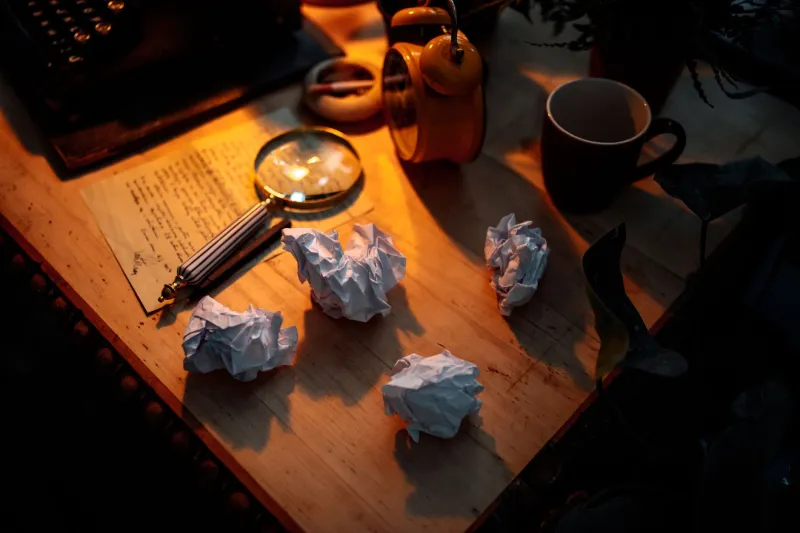
There's a particular sound a typewriter makes when you hit the carriage return. A physical thunk followed by a mechanical swoosh, like the machine itself is exhaling. For a growing number of writers across the US, that sound is the whole point.
They're not hobbyists in the vintage sense — not collectors who keep machines behind glass. These are people who actually use them. Every day. On purpose. And increasingly, they're finding each other.
The Friction Is the Feature
Ask anyone deep in the typewriter community why they made the switch, and they'll all circle back to the same idea: the difficulty is what makes it good.
"On a laptop, I can delete everything I write the moment I write it," says Marcus Osei, who runs a monthly typewriter meetup called Heavy Keys out of a community arts space in Philadelphia. "The backspace key made me a coward. I'd revise before I even finished a thought. The typewriter forced me to commit."
That idea — that deliberate friction unlocks something — keeps coming up. Writing on a typewriter means you can't Google a synonym mid-sentence without physically stopping. You can't get a Slack notification. You can't doom-scroll between paragraphs. The machine demands your full attention, and in 2024, that kind of forced presence feels almost radical.
This isn't just a vibe. Researchers who study creativity and attention have long argued that constraint breeds output. The typewriter doesn't give you options. It gives you a page and a ribbon and the sound of your own thinking.
Meetups, Swaps, and the People Who Keep These Things Alive
Heavy Keys isn't unique. Similar gatherings have been quietly popping up in cities like Portland, Austin, Chicago, and Brooklyn — people hauling their machines to coffee shops, parks, and library basements to write alongside strangers. The format varies. Some are timed free-writes. Some are pure social hours where the typing is almost incidental. What they share is the vibe: low-stakes, unplugged, weirdly intimate.
Then there's the swap culture. Online communities — particularly on Reddit and a handful of Discord servers — have built out entire ecosystems for trading and gifting machines. A working Olympia SM3 from someone in Ohio might end up with a college student in New Mexico who can't afford the boutique resale market. People are deliberate about it, too. They want the machines to be used, not hoarded.
"I've given away probably twelve typewriters at this point," says Dani Reyes, a poet based in Denver who also moderates one of the larger typewriter Discord servers. "I find them at estate sales, clean them up, make sure they work, and pass them on. It feels like keeping something alive."
That ethos — preservation through use — runs through the whole scene. It's not about owning a pretty object. It's about keeping the practice going.
The Repair Underground
Of course, a machine that's been sitting in someone's attic since 1978 doesn't always come back to life on its own. Which is where the repair collectives come in.
Groups like Typecraft in Seattle and the Keystroke Collective in Atlanta have built informal networks of people who know how to clean a type slug, re-ink a ribbon, or coax a sticky key back into action. Some are trained technicians. Most are self-taught obsessives who learned from YouTube tutorials, old repair manuals scanned and uploaded to the Internet Archive, and a lot of trial and error.
What's interesting is how these collectives function less like businesses and more like community workshops. Drop-in repair nights are common. Knowledge is shared freely. The goal isn't profit — it's keeping machines in rotation.
"We had a woman come in with her grandmother's Royal Quiet De Luxe," recalls Tomás Villanueva, one of the organizers behind a repair night hosted monthly at a makerspace in San Antonio. "It hadn't worked in forty years. We got it running in about two hours. She cried. That's what this is about."
Digital Burnout as Creative Catalyst
It would be easy to write this off as nostalgia — as people romanticizing a past they never actually lived. But talk to the people actually doing this, and the motivation is way more present-tense than that.
Many of them are writers who came up entirely in the digital era. They've had the Google Docs, the Notion boards, the productivity apps promising to optimize their creative process. And they're exhausted by it. The quantification of creativity — word count goals, habit trackers, AI writing assistants that suggest your next sentence before you've thought of it — has started to feel less like support and more like surveillance.
The typewriter, weirdly, offers an escape from all of that. There's no syncing. No cloud backup anxiety. No algorithm learning your writing style to sell it back to you. Just paper, ink, and the thing you actually wanted to say.
"I think a lot of us are grieving something," says Dani Reyes. "We grew up being told that faster is better, that more tools means more creativity. And then we burned out and realized we'd never actually sat with our own thoughts long enough to write anything real."
More Than Aesthetic
It's worth noting that the typewriter's cultural moment isn't purely underground. Tom Hanks has famously collected hundreds of them. Celebrities have been photographed with vintage machines on their desks. There's a real risk of the whole thing getting flattened into an aesthetic — a prop for a certain kind of writerly Instagram.
But the community-level stuff feels genuinely resistant to that. The repair collectives aren't trying to be cool. The swap networks are actively anti-hoarding. The meetups welcome absolute beginners, people who've never touched a typewriter in their lives, right alongside people who can explain the mechanical difference between a Hermes 3000 and a Brother Deluxe.
The point isn't the machine. The point is what happens when you slow down enough to use it.
The Page Doesn't Notify You
There's something almost confrontational about the typewriter in 2024 — not because it's old, but because of what it refuses to do. It won't tell you you've been sitting for too long. It won't suggest a word. It won't back up your draft or share it or optimize it for engagement.
It will, however, make that sound when you hit the carriage return. That exhale. That moment of completion before the next line begins.
For a lot of writers, that sound is the whole reason they showed up.