Click, Ding, Repeat: How the Typewriter Became the Creative Underground's Most Coveted Tool
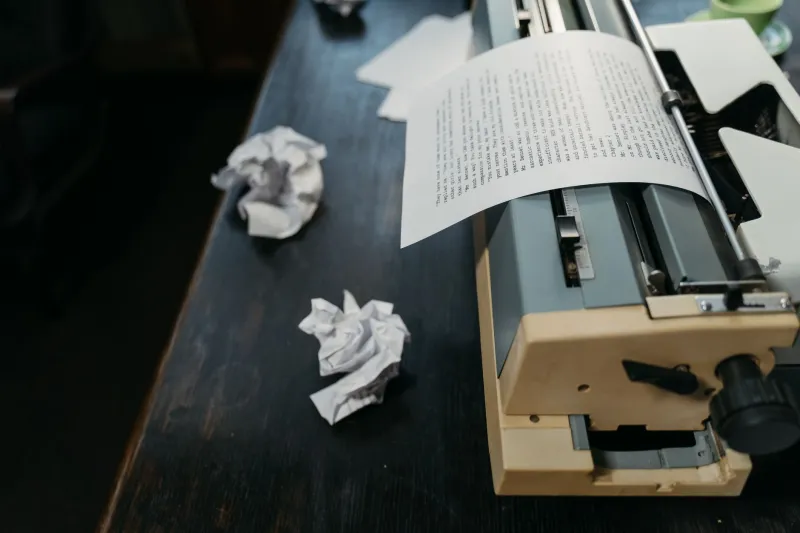
There's a specific sound that's been echoing out of apartments, coffee shops, and converted garage studios lately. It's rhythmic, mechanical, almost aggressive — and it belongs to a machine that most people assumed was decorating a prop shelf in some mid-century movie set. The typewriter is back, and it didn't come quietly.
Across the US, a loose but passionate community of writers, poets, screenwriters, and visual artists has started gravitating toward mechanical typewriters not as a quirky affectation but as a genuine creative practice. These aren't people who stumbled on a dusty Olivetti at a flea market and thought it looked cool on Instagram — though that's how some of them started. These are people who kept coming back to it, who cleared off their desks, who learned to love the resistance.
Why a Machine From the 1950s Feels More Honest Than a MacBook
Ask anyone deep in the typewriter community what drew them in, and they'll almost always start with the word permanence. On a screen, everything is provisional. You can delete, revise, cut, paste, and undo until the original thought is completely buried. On a typewriter, you commit. That letter hits the page, and it stays there.
For Dani Reyes, a poet based in Chicago who runs a small typewriter-written chapbook series out of her apartment, that commitment is the whole point. "The first draft on a typewriter is actually a draft," she says. "When I write on a laptop, I'm editing as I go, constantly second-guessing. The typewriter forces me to trust the sentence. It makes me a braver writer."
There's also the sensory dimension that digital tools simply cannot replicate. The physical resistance of the keys — different on every machine, a whole language unto itself — gives writers a tactile feedback loop that connects the body to the work. Typists describe entering a kind of flow state that's different from anything they experience at a keyboard. The clack isn't a distraction; it's a rhythm. It keeps you in the sentence.
The Collector Economy Fueling the Revival
You can't talk about the typewriter underground without talking about the collectors. They're the ones who know that a 1960s Hermes 3000 types differently than a Royal Quiet De Luxe, who argue passionately about platen tension and key travel, who haul machines home from estate sales and spend weekends cleaning typebars with cotton swabs and denatured alcohol.
Shops like New York City's Gramercy Typewriter Co. and California-based typewriter repair specialists have reported surging demand over the past several years, particularly from customers under 40. The machines themselves have become objects of serious desire — clean, working examples of classic models can fetch hundreds of dollars online, and rare variants from European manufacturers can go much higher.
Marcus Thill, a collector and repair technician in Portland, Oregon, has seen the shift up close. "Five years ago, most of my customers were older folks getting family machines serviced," he says. "Now I'm getting 22-year-olds who watched a YouTube video, bought a beater at Goodwill, and want to know how to make it sing. The enthusiasm is real. These aren't people who want a decoration. They want to write."
The Distraction-Free Argument — and Why It Hits Different Now
We live in an era of relentless digital noise. Every productivity app promises focus while burying you in notifications, integrations, and updates. The irony isn't lost on the people who've walked away from all of it. A typewriter has exactly one function. It does not ping you. It does not suggest a synonym. It does not save your work to the cloud, which means you have to save it yourself — by finishing the page.
Screenwriter Jordan Okafor, who works in LA and started drafting on a 1970s Olympia SM9 during the pandemic, describes the shift as almost meditative. "I'd been using Final Draft for years, and I was productive, technically. But I was also always half-somewhere-else. The typewriter put me back in the room. It sounds dramatic, but it genuinely changed how I work."
This kind of testimony is common in the community, and it's connecting the typewriter revival to broader conversations about attention, creativity, and the psychological cost of always-on digital life. For a generation that grew up online, choosing an analog tool isn't regression — it's rebellion.
When the Typewriter Leaves the Page
What makes this revival genuinely interesting from a cultural standpoint is how far the influence has spread beyond writing itself. Music producers have been sampling typewriter sounds for years — the rhythm of keys, the ding of the carriage return, the thwack of the platen — and that practice has accelerated as lo-fi and ambient genres have exploded in popularity. The typewriter is showing up in percussion tracks, in ASMR content, in film scores.
Visual artists have started incorporating typed text directly into their work, using typewriters to create textural layers on canvas or paper that feel categorically different from printed type. The slight imperfections — the uneven ink distribution, the occasional misalignment — give the work a humanity that no font can fake.
Zine culture, already thriving, has found a natural ally in the typewriter. The machines produce text that looks handmade without being illegible, personal without being precious. For zine makers who want their publications to feel like artifacts rather than documents, the typewriter delivers something a laser printer simply can't.
The Anti-Productivity Productivity Tool
Here's the paradox that keeps coming up: people who switch to typewriters often report more creative output, not less. Without the option to endlessly revise mid-sentence, they finish drafts. Without the internet a tab away, they stay in the work. Without the anxiety of a blinking cursor on a white screen that looks exactly like every other white screen, they find a specific, physical relationship to the page that keeps them coming back.
It's the kind of thing that sounds like self-help advice until you actually try it. And more and more people are trying it.
Dani Reyes puts it simply: "People think it's about nostalgia. It's not. I have no nostalgia for the typewriter era — I wasn't alive for it. It's about what the machine asks of you. It asks you to mean it. And when you mean it, you write better."
The clack keeps going. The carriage returns. The page fills up. And somewhere in that rhythm, a quiet counter-culture is building something that no algorithm is going to disrupt.