Brew Your Own Rebellion: How Gen Z's Kitchen Witches Are Fermenting a New Kind of Wellness
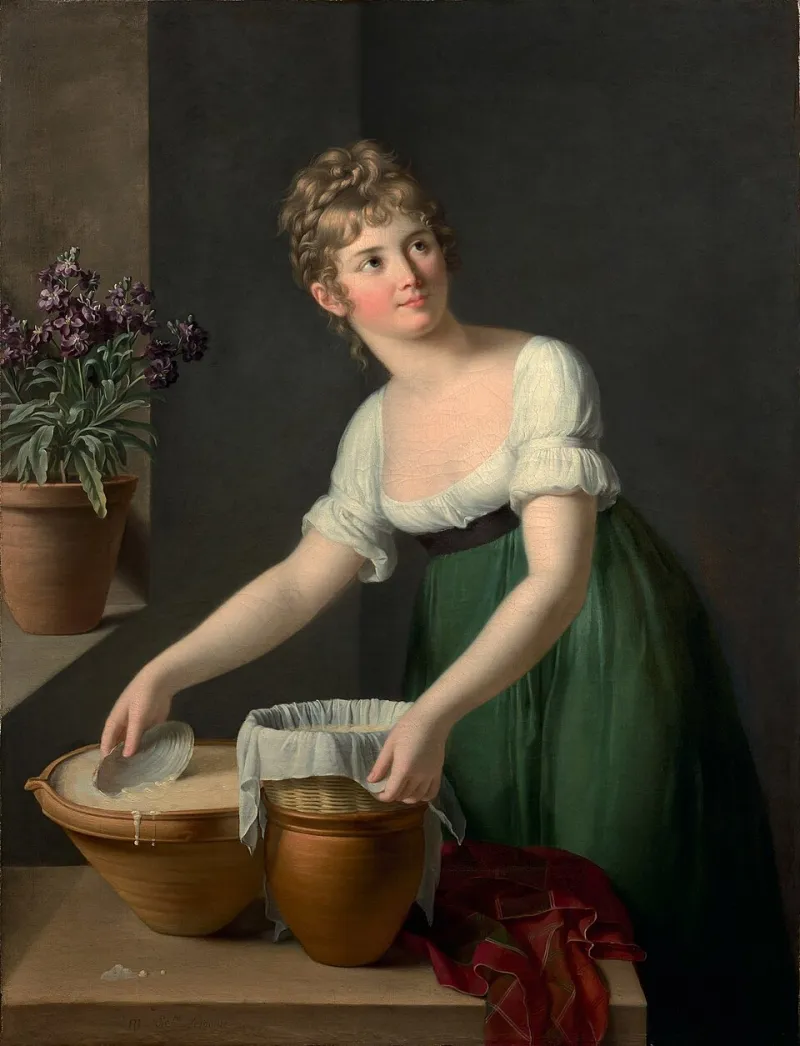
Photo: Marie-Victoire Lemoine, Public domain, via Wikimedia Commons
There's a jar of something purple and slightly fizzing on Maya Chen's kitchen counter in Portland, Oregon. She's 23, works in graphic design, and will tell you with complete sincerity that the jar contains "a blackberry and yarrow shrub that's been going for about two weeks." She found the recipe on a Reddit thread. She cross-referenced it with a 1970s foraging manual she bought at a thrift store. She has absolutely no plans to sell it, promote it, or turn it into content.
That last part is kind of the whole point.
All across the US, a loosely connected movement of young people is quietly reclaiming the ancient, messy, deeply unglamorous art of home brewing — not in the craft beer sense, but in the older, earthier tradition of herbal remedies, fermented tonics, and botanical preparations that your great-grandmother might have called folk medicine and a wellness brand would now charge you forty dollars a bottle for. It's part aesthetic movement, part spiritual practice, part deliberate act of refusal. And it's growing fast.
The Potion Is Political
To understand why a 22-year-old in Columbus is spending her weekends decocting rose hip syrup, you have to understand what she's pushing back against. The American wellness industry is worth over half a trillion dollars globally, and a significant chunk of that growth has been driven by marketing directly at younger consumers — people who are anxious, burned out, and searching for something that feels real. The result is an avalanche of "clean" supplements, mushroom coffee brands with millennial-pink packaging, and influencer partnerships hawking ashwagandha gummies as if ancient Ayurvedic practice were a Sephora product launch.
For a lot of Gen Z, that packaging started to feel like exactly the problem it was pretending to solve.
"There's something deeply weird about buying a tincture from a company that also has a venture capital investor," says Jordan Reyes, a 25-year-old in Austin who runs a small but devoted subreddit called r/folkbrewing. "Like, at some point the thing you were trying to escape from just followed you into the wellness aisle."
The response, for Reyes and thousands like them, has been to go back further — past the brand, past the influencer, past the algorithm — and learn how to actually make the stuff. Not to sell it. Just to know it.
TikTok Taught Them, Then They Left
Here's the irony at the center of this movement: a huge chunk of it was born on the very platforms it's now reacting against. The "cottagecore" aesthetic — all linen aprons, dried herb bundles, and soft-focus images of dew-covered mushrooms — exploded on TikTok around 2020 and 2021, giving millions of quarantine-era users a visual vocabulary for a slower, more tactile kind of life. Witchy content followed close behind, pulling from tarot, herbalism, folk magic, and a general vibe of candle-lit intentionality.
But somewhere between the aesthetic and the practice, a split happened. On one side: the cottage-life influencers who monetized the look, building audiences around ambient homesteading content and carefully lit herb-drying reels. On the other: people who got genuinely obsessed with the knowledge underneath the aesthetic and went digging.
"TikTok is where I first saw someone make fire cider," says Nadia Okafor, a 21-year-old nursing student in Chicago. "But then I went to Reddit and Discord to actually learn it, because TikTok is thirty seconds and you're not learning anything real in thirty seconds."
The Discord servers and subreddits she's talking about operate at a completely different frequency from the aesthetic content. They're nerdy, text-heavy, and deeply serious about sourcing, safety, and historical context. Members debate fermentation science alongside folk magic traditions. They share PDFs of out-of-print herbalism texts. They push back hard when someone conflates cultural appropriation with folk practice, or when a recipe turns out to be more vibe than viable.
The Folk vs. Fantasy Tension
Not everyone in these communities is comfortable with the witchy framing, and that tension is worth sitting with. For many practitioners — particularly those from Black, Indigenous, and immigrant communities — folk herbal traditions aren't an aesthetic choice. They're living cultural inheritance, and watching them get filtered through a white cottagecore lens raises legitimate questions.
Several of the most respected voices in these online spaces are explicit about this. They distinguish between learning from and honoring a tradition versus cosplaying it for the 'gram. The community polices this, sometimes aggressively. A Reddit thread advocating for "smudging" without acknowledging its specific Indigenous origins will get corrected quickly and thoroughly.
The brewing and fermenting corner of the movement tends to sidestep some of this by focusing on regionally specific European folk traditions — shrubs, meads, herbal vinegars, bitters — that are genuinely ancestral for many of its mostly white practitioners, without claiming a spiritual authority they haven't earned.
What's Actually in the Jar
So what are people actually making? The range is genuinely surprising. Fire cider — a spicy, vinegar-based immune tonic with roots in American folk herbalism — is a gateway recipe for a lot of beginners. Kombucha and water kefir are common starting points for fermentation. From there, people branch into elderflower cordials, adaptogenic mushroom broths, herbal oxymels (honey-vinegar preparations), and, for the more adventurous, small-batch meads and fruit wines.
The emphasis is consistently on learning the why — understanding what a plant actually does, where it comes from, how it's been used historically — rather than just following a recipe. It's the difference between cooking from a box and learning how to cook.
"I know what's in my body now," Maya says, glancing at the purple jar. "Not because a brand told me it was 'clean.' Because I made it and I understand it."
The Commercialization Clock Is Ticking
Of course, the moment any subculture generates enough aesthetic energy, the brands come sniffing. There are already Etsy shops selling pre-made "ritual kits" and Instagram accounts with 200k followers built entirely on this aesthetic. The corporate wellness machine is paying attention.
The communities that have stayed most vital are the ones that have made knowledge — not vibes — their primary currency. You can't really sell someone a Discord thread about the chemistry of lacto-fermentation. You can't package the three-hour rabbit hole of reading about medieval mead-making. The depth is the defense.
For now, at least, the jar on Maya's counter stays unglamorous, unlabeled, and entirely her own. And that, she'll tell you, is exactly the point.