Back to the Platter: The Young DJs Choosing Vinyl Scratches Over Software Shortcuts
Photo: Flintmichigan, CC BY-SA 4.0, via Wikimedia Commons
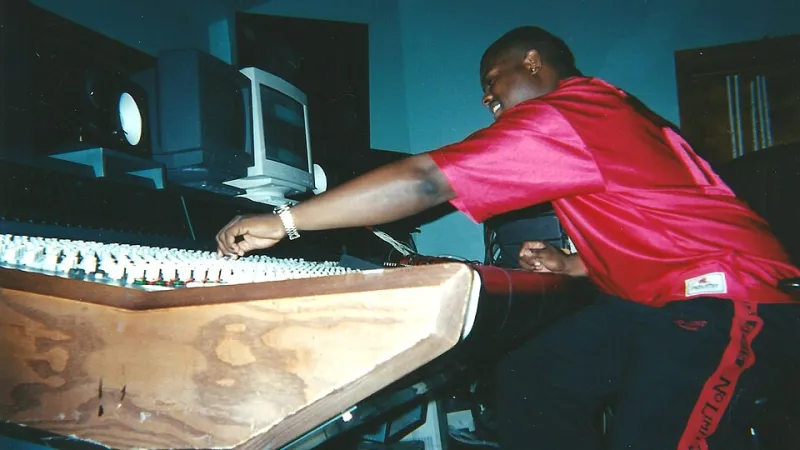
Somewhere in a rented warehouse space in East Detroit, there are four turntables set up on folding tables, and a 22-year-old named Deshawn is practicing the same two-second scratch for the forty-fifth time tonight. He's not frustrated. He's locked in. His phone is across the room, face down. The only sounds are the needle, the platter, and the low hum of a space heater doing its best.
Deshawn is not an anomaly. He is, increasingly, a type.
Across the country — in Chicago lofts, Oakland garages, Philly basements, and converted Brooklyn warehouses — a generation that grew up on Spotify and SoundCloud is turning its back on digital mixing software and picking up actual, physical vinyl. Not to be ironic. Not to look cool in photos. Because they think it sounds better, feels better, and means more.
This is the turntablism revival, and it is messier and more interesting than anyone expected.
Why Software Started Feeling Like Cheating
To understand why so many young DJs are reaching for crates instead of controllers, you have to understand what the digital DJ ecosystem actually looks like right now. Programs like Serato, Traktor, and rekordbox have made mixing more accessible than ever — sync buttons handle beatmatching automatically, visual waveforms eliminate the need to feel a track, and cue points make transitions nearly foolproof.
None of that is inherently bad. But for a certain kind of music obsessive, it created a ceiling. When the software handles the hard parts, what exactly are you doing?
"I used to DJ with a controller and I was technically fine," says Kezia, who runs a vinyl-only DJ night in Chicago's Humboldt Park neighborhood. "But I felt like a PowerPoint presenter. I was advancing slides. The music wasn't coming through me, I was just queuing it."
Her night, which she started in 2022, now pulls consistent crowds of 80 to 120 people — mostly in their twenties, mostly people who've never owned a record player themselves but who feel something different in the room when the music is coming off wax.
The Tactile Argument
Turntablism — the art of using turntables as instruments rather than playback devices — has a rich history that runs through hip-hop, jazz, and experimental electronic music. The techniques: scratching, beat juggling, needle drops, transformer scratches — require physical dexterity, muscle memory, and an intimate relationship with the record itself.
You have to know where you are on the vinyl. You have to feel the groove. You have to develop a sensitivity to the equipment that no software can replicate, because the equipment is imperfect in ways that are actually generative.
"A turntable will fight you," says Marcus, a DJ and music historian based in Los Angeles who has been documenting the current vinyl revival for an upcoming zine project. "The pitch fluctuates, the needle skips, the record has surface noise. And all of that becomes part of your sound. Digital DJ software is designed to eliminate those variables. But those variables are music."
Marcus draws a direct line from the original Bronx DJs of the 1970s — who famously extended breakbeats by switching between two copies of the same record — to what's happening in warehouses today. The technology is the same. The impulse is the same: to find music inside the machine rather than just through it.
Underground Logistics
One of the most interesting aspects of this revival is how deliberately unglamorous it is. These aren't club nights with bottle service and Instagram lighting. They're warehouse events, community center takeovers, basement parties with $5 cover charges and BYOB policies.
The infrastructure is almost aggressively DIY. Collectives share equipment. Crates get passed around. More experienced turntablists run informal workshops for people just getting started. In Philadelphia, a group called Groove Theory holds monthly sessions that are equal parts practice space and social club — anyone who shows up with a record and genuine curiosity is welcome.
"We're not gatekeeping this," says Priya, one of Groove Theory's organizers. "The whole point is to get as many people touching the equipment as possible. Because once you feel it, you get it. You can't explain it, you just get it."
The learning curve is steep, and the community seems to embrace that. There's a shared understanding that the difficulty is part of the value — that anything worth doing in music should probably require some suffering.
What This Says About Electronic Music Right Now
The vinyl DJ revival doesn't exist in isolation. It's happening alongside the shoegaze resurgence, the cassette tape comeback, and a broader cultural suspicion of algorithmic music consumption. There is a generation that has spent its entire life being served music by recommendation engines, and a meaningful portion of that generation is deciding it wants to find music instead.
Vinyl DJing is physically demanding in a way that forces presence. You cannot phone it in. You cannot set a playlist and walk away. Every moment of a vinyl DJ set is a live decision, made with your hands, in real time, in front of people.
For an audience that has spent years watching DJs stare at laptops, that visibility — that humanness — registers as something radical.
Back in the Detroit warehouse, Deshawn finally gets the scratch right. He does it again. Then again. He grins at nobody in particular.
There is no algorithm for that moment. That's exactly the point.