Axels and Autotune: Meet the Teens Scoring Figure Skating's Quiet Rebellion
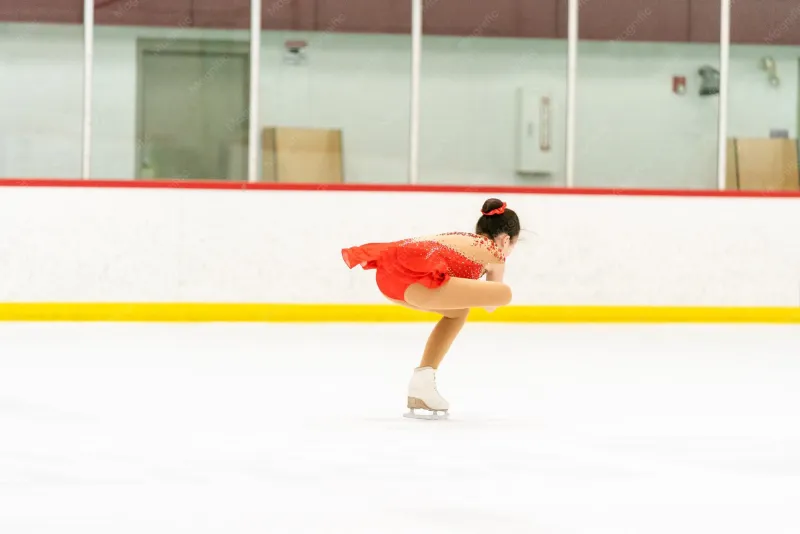
Photo: teen figure skater practicing alone at empty indoor ice rink, via img.freepik.com
The rink smells like burnt rubber and old ice. It's 6 a.m. in a suburb outside Columbus, and 16-year-old Marisol Vega is gliding to a song that sounds like a computer having a very beautiful breakdown.
Her program music — a chopped-and-screwed hyperpop track by an artist with fewer than 4,000 monthly listeners — would have been unthinkable at a competition even five years ago. Judges expect Tchaikovsky. They expect swelling violin cuts and tasteful piano. What they don't expect is a triple salchow landing on a bass drop that sounds like a dial-up modem falling in love.
Vega doesn't care. Neither do the thousands of people who've watched her bootleg performance film, shot on a friend's phone and posted to TikTok with zero editing beyond a caption that reads "judges gave this a 38. the girls get it."
The Sound of a Dying Rink
There's a context here that matters: America's local ice rinks are quietly disappearing. Rising energy costs, aging refrigeration systems, and land values that make a hockey rink look like a waste of prime real estate have closed community rinks at a steady clip for over a decade. The ones that survive often survive on fumes — daytime public skates, birthday parties, and a competitive club that's smaller than it used to be.
That scarcity has shaped this generation of skaters in unexpected ways. Many of them trained in rinks with patchy ice, ancient sound systems, and coaches stretched thin across too many students. The polish of the traditional competitive pipeline — the ballet instructors, the music editors charging hundreds per program, the choreographers with Olympic pedigrees — simply wasn't available.
So they built their own version of the sport. And it sounds like the internet.
Editing Music in a Bedroom, Not a Studio
Program music in figure skating is a craft unto itself. Traditional programs are built from classical recordings edited into seamless 2 minute and 40 second (or 4 minute, for seniors) arcs, with dramatic peaks timed to jumping passes. Families historically paid specialists to do this editing.
The hyperpop skaters do it themselves, in free audio software, splicing underground tracks with an intuition that comes from years of making TikToks and playlists. They know exactly where a chorus should hit because they've spent their lives inside songs that were built for short attention spans and big feelings.
"I've never skated to anything with an orchestra," Vega laughs. "I don't even know where you'd start. But I know that if I put the glitchy part right before my step sequence, the whole rink feels different."
She's right, and the clips prove it. Scroll the tags — there are a few, none official yet, which tells you how young this scene is — and you'll find skaters in Ohio, Texas, and New Jersey performing to ambient artists, breakcore, and bedroom-produced hyperpop, their programs uploaded like fan films rather than competition footage.
The Judging Problem
Here's the friction: figure skating's judging system rewards technical difficulty and, at least in theory, artistic interpretation. But "artistic interpretation" has historically meant a fairly narrow band of expression — lyrical, classical, safe.
Under the International Judging System, program components scores cover things like composition and interpretation of music. A program set to abrasive, chaotic hyperpop faces an uphill battle with a panel that may simply not know what to listen for. Skaters in this scene report component scores that feel like a shrug in numerical form.
Some coaches are adapting, though. A handful of younger competitive coaches have started treating unconventional music choices as a strategic asset rather than a liability — programs that stand out in a warmup group of eleven Swan Lakes. And the sport's governing bodies, hungry for relevance with a demographic that abandoned linear TV long ago, have noticed the TikTok numbers.
Whether the establishment embraces it or not, the skaters have already made their peace with the split. Competition is for the judges. The phone footage is for everyone else.
Why It Matters
There's something quietly radical about a sport built on nineteenth-century European aristocratic traditions being reclaimed by teenagers in dying suburban rinks, scored to music made in bedrooms by artists nobody with judging credentials has heard of.
It's also just fun to watch. That matters more, honestly.
The rinks might be closing. The judging panels might never come around. But on a Monday morning in Ohio, a 16-year-old landed a triple salchow to a song with 40,000 streams, and half a million people have now seen it. That's a bigger audience than most televised Grand Prix events. The kids have already won — they're just waiting for the rest of the sport to catch up to the music.