Preserved With Care: The Queer Taxidermists Turning Mortality Into Something Tender
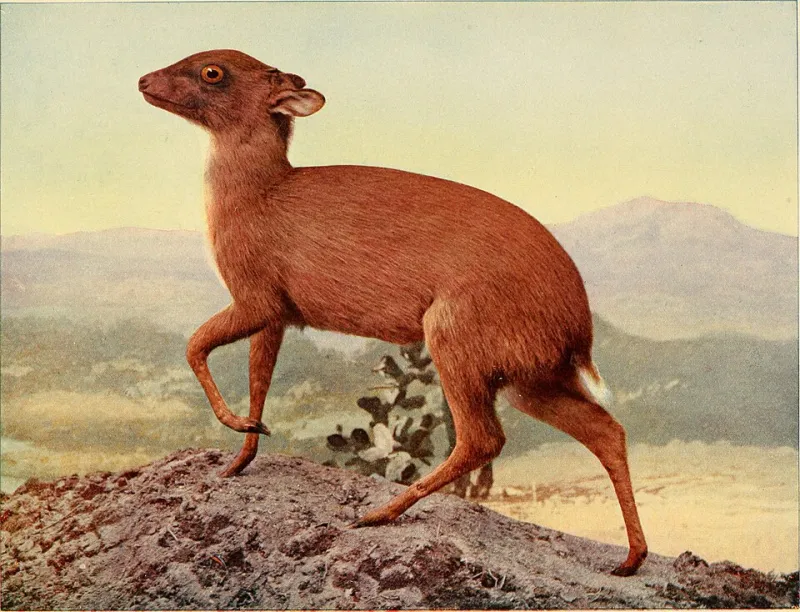
Photo: Internet Archive Book Images, Public domain, via Wikimedia Commons
The first thing you notice in Ro's studio is the light. It comes in soft through linen curtains, falling across a worktable covered in the kind of careful arrangement that only happens when someone genuinely loves what they're doing. There are glass eyes in small jars, sorted by color. There are hand-sewn forms, dried botanicals, reference photographs pinned to a board. And there, in the center of it all, is a small songbird — a cedar waxwing found dead on a city sidewalk — in the early stages of being preserved.
"People think taxidermy is about stopping death," Ro says, adjusting their magnifying lamp. "But it's really about sitting with it. Learning its shape. Deciding what you want to say about it."
Ro is part of a growing community of LGBTQ+ artists and naturalists who are fundamentally reimagining what taxidermy is for — and who it's for. They are not hunting trophies. They are not Victorian-era curiosity cabinets, though they're happy to borrow the aesthetic. They are, in the most literal sense, acts of love.
A Practice With Baggage
Traditional taxidermy carries a lot of history, and not all of it good. The practice has deep roots in colonial natural history — the extraction of specimens from ecosystems, often by force, often from communities who had no say in the matter. Museum natural history collections worldwide are still grappling with the ethics of what they hold and how they got it.
Closer to home, American taxidermy culture has long been associated with hunting, with masculine display, with a particular relationship to dominance over nature that sits uncomfortably in 2024. The mounted buck head. The bass on a plaque. The trophy as evidence of conquest.
The artists in this community are aware of all of that. They talk about it openly, sometimes in the same breath as they describe the piece they're currently working on. The reclamation isn't naive — it's deliberate.
"I didn't come to taxidermy to ignore its history," says Sable, a trans woman and naturalist based in New Orleans who works primarily with birds and small mammals found deceased in urban environments. "I came to it because I thought the practice deserved a different future than the one it was heading toward."
The Ethics of the Found
One of the defining characteristics of this community is its strict relationship with source material. Virtually every artist working in this space uses only animals that died of natural causes, were found already deceased, or were donated by wildlife rehabilitation centers. Many hold the federal permits required to legally possess certain bird species. Several have formal training in biology or veterinary science.
This isn't incidental — it's central to the philosophy. The work is not about taking. It's about receiving.
"When someone brings me their pet that passed," says Juniper, a taxidermist and grief counselor in Portland, Oregon, "they're trusting me with something enormous. That animal was family. My job is to honor that."
Juniper has developed what she calls a "memorial practice" that combines traditional preservation techniques with elements drawn from funeral rites, botanical arrangement, and what she loosely describes as a queer approach to ritual — one that refuses to rush grief or make it tidy.
Her finished pieces are not mounted in aggressive poses. They rest. They curl. They look, somehow, peaceful.
Building New Rituals
Grief is a recurring theme in conversations with artists across this community, and it doesn't feel accidental. LGBTQ+ communities have historically had complex, often painful relationships with death — with the AIDS crisis, with violence, with the loss of chosen family members in a culture that didn't always recognize those bonds.
Taxidermy, in this context, becomes a way of building mourning practices that actually fit. Practices that don't require a church, or a nuclear family, or a particular relationship to the deceased that society deems legitimate.
"Queer people have always had to make our own rituals," says artist and writer Cassian, who recently published a zine about queer death culture that includes interviews with several taxidermists. "We've been doing it around AIDS, around chosen family, around all kinds of loss that didn't have an existing script. Taxidermy is just another tool for that."
The installations that come out of this practice tend to be intimate in scale — not the grand natural history diorama, but the small, careful thing under a glass dome. A mouse in a bed of dried lavender. A sparrow with its wings folded, surrounded by handwritten notes from the people who loved it. Objects that invite you to come close rather than step back.
Where the Community Lives
Like so many niche creative communities right now, this one has built itself largely online — through Instagram accounts and Discord servers and small-run zines — before finding each other in person at natural history markets, craft fairs, and the occasional gallery show.
Organizations like the Association of Independent Taxidermists have seen membership from younger, more diverse practitioners grow steadily over the past several years. Workshops led by queer and trans taxidermists frequently sell out, often drawing participants who have never considered the practice before but feel drawn to the combination of craft, care, and confrontation with mortality.
"People are hungry for ways to think about death that don't feel cold or institutional," Ro says, setting down their tools and looking at the cedar waxwing. "This bird landed on a sidewalk and someone picked it up and brought it to me. That's already a kind of love. I'm just continuing it."
The curtains shift. The light changes. The work continues.